RE/MAX has more than 90,000 agents in more than 80 countries!

If you choose RE/MAX you won't be disappointed. 

RE/MAX has more than 90,000 agents in more than 80 countries!
If you choose RE/MAX you won't be disappointed.
Call me for details on this unique opportunity! 778-241-8946


The home owner grant reduces the amount of property tax you pay for your principal residence.
The grant is available to qualified residents that pay property taxes to a municipality or the province in a rural area. If you pay your property taxes to a First Nation, contact the First Nation directly.
Find out what you may qualify for as a B.C. resident:
You (or your spouse) can only claim the home owner grant for your principal residence each year. However, if you are married and have a written separation agreement with your spouse at the time you apply, you can each claim the home owner grant for separate principal residences.
$100K in upgrades!!

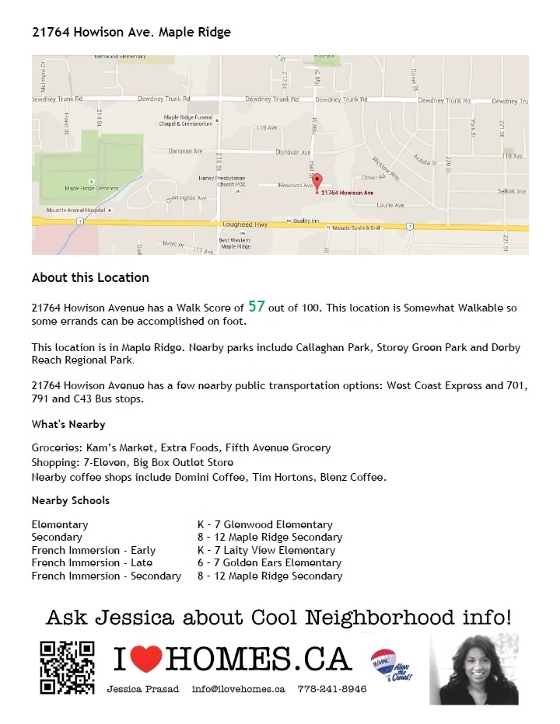
Wondering what's around?
OPEN HOUSE ON SATURDAY JUNE 13. 1 - 3 PM!

We all protect our home from fire and smoke, but what about water damage? The Home Insurance experts at BCAA offer eight excellent tips to avoid a costly mess
Water damage is one of the most common and costly challenges facing BC homeowners. The frequency and severity of water damage claims continue to grow due to extreme weather, more complex appliances and the growing popularity of condensed multi-unit living.
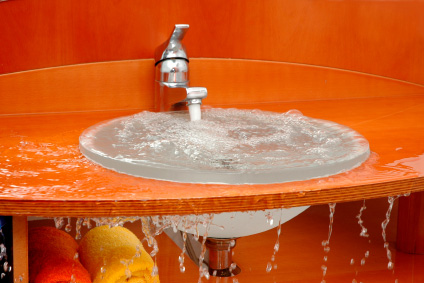
Most insurance policies do not cover water damage caused by continuous or repeated seepage, rising ground waters or surface waters – but sudden, while accidental, escape of water from a watermain, plumbing, heating system or internal drain are usually covered. Water damage resulting from a private external drain or entry of water through an opening in your roof are usually not covered and depend on your policy; additional coverage can be purchased for either event to provide you with protection needed.
A few simple precautions can help to safeguard your home and possessions from water damage:
Install water alarms. They work like smoke detectors but warn of leaks from toilets, water heaters, overflowing baths and sinks. Simply place near any water source and a high-pitched alarm alerts you to water leaks. Water alarms start from as little as $15 a unit.
Install stainless steel-braided hoses where possible. These hoses cost around $20 and are less likely to deteriorate than plastic hoses. Dishwasher and washing machine hoses should be inspected and replaced every three to five years.
Use a rain barrel. Rain barrels keep rainwater out of overloaded storm sewer infrastructures and provide you with water for your garden. Check if your municipality has a program that offers subsidies for a rain barrel purchase.
Connect an eavestrough downspout extension. Extend the eavestrough at least six feet from foundation walls to prevent water from draining into your basement, and direct it towards the street. Downspout extensions cost around $15.
Check the foundation. As ice melts or after heavy rain, clear any pooling water away from the home.
Inspect the roof. Get the roof inspected every few years to check the condition of the shingles and replace when necessary in order to prevent leaks.
Test the sump pump. If the basement has one, examine it and conduct a test run especially if it doesn’t get used frequently.
Protect your valuables. Consider moving valuables away from high-risk areas, such as the basement, or place items on high shelves or risers, especially in homes prone to water damage.
Meet me at the Deer Lake Trail in Burnaby!!

Moving to a smaller place? Over time, we tend to accumulate stuff - lots of stuff. We have drawers full of stuff, gifts that we have never used (and never will), furniture we don’t really need but keep “just in case” and items that we’ve had for years may be difficult to part with due to nothing more than familiarity while serving no functional purpose. Now is the time to get rid of excess baggage (literally!) and pare down to the essentials.


Everything is close by, you don't need a car.


Hey, downsizer - the only thing you have to fear is fear itself.
Chances are, if you're reading this, you've at least thought about it. Most boomers do at some point, and a lot of us follow through on it.
The Conference Board of Canada has predicted more than 80 per cent of new housing demand will come from those over 65 in the next 20 years.
Those number geeks also say 60 per cent of new households will be formed by those 75 and up.
That's a lot of tears and moving boxes, people.
My wife and I missed the Freedom 55 moment two years ago, but after a dizzying flurry of real estate transactions, basement purging and a jump off some emotional and financial cliffs, we're living the next best thing: the downsizer dream. The following advice is worth what you've paid.
DON'T THINK IT THROUGH
Carefully researching neighbourhoods, analyzing the market, selling before you buy - you'll never do it.
The very thought of dealing with all your stuff is enough to make you open another bottle of wine and watch Hoarders instead. See, those people are much worse than you. Besides, you love your house.
Our household was split along pretty familiar gender lines for ages. I regularly issued orders that we were moving downtown to end my three-hour daily commute and painful war with the flora and fauna in our yard. My wife, meanwhile, continued to transform said yard into a garden paradise and nurture our social connections in a beautiful beach neighbourhood.
It all came to a crashing halt after 18 years when my wife did the unthinkable: she called my bluff and fell in love with a 686-square-foot apartment on Stanley Park. The loss of a beloved family pet really started it all (a familiar story, it turns out), but before I could get out the words "uh, maybe we should think about this," the apartment was purchased and the house had to go.
Fasten your seat belts; it's time to sell the house.
FIRST RULE - DO NOT TAKE IT PERSONALLY
After almost 20 years at the same address in a community we loved and a house that we had gutted once and renovated almost constantly, we were thrust into a harsh new world of real estate bargaining - and a closing date on the apartment loomed.
We soon learned it's a jungle out there, and the market was on the verge of softening.
The process was brutal, as personal items and artwork were appraised and became part of the purchase-offer battleground.
Just to make it a little more interesting, one of our best friends became our realtor. The result? Sold in eight days, and we had to be out in three weeks.
Needless to say, we're all still the best of buddies.
NOW COMES THE HARD PART. YOU HAVE TO GET RID OF YOUR STUFF
Chances are, one spouse will do more of that work than the other. And that there could be some temptation on the other's part to critique that work.
That could lead to different interpretations of what is "good stuff" and what is not. Tread softly, and for the love of Santa, do not ask if the family really needs four boxes of Christmas stuff (when the count has already been whittled in half.)
"Good stuff," when it came to classified ads and garage sales, turned out in our case to be the kitsch and mid-century modern. Beautiful heirloom furniture from mom and dad? No thanks, but I'll take that cool Coke sign or funky night light. If it was big, and made robustly out of wood to last the ages, nobody wanted it. That included a heritage baby grand piano. But if it was in any way featured on TV in the '60s or '70s, it was gone.
We dreaded dealing with the almost 40 years worth of photo albums, but my wife dealt a master stroke. Photos were ripped from the pages and compiled according to the faces in the snapshot. Each family member and old friend then received a package of nostalgia to do with what he or she saw fit.
After the giveaways to family members and friends, the sales to those who responded to ads and the parade of antique dealers who toured the house, it was time to face the music.
If there's anything worse than waking up at 6 a.m. with a massive hangover, it's waking up at that ungodly hour to put on a garage sale. In the rain. At least you get to see who your real friends are.
After the soggy but successful garage sale (due entirely to the efforts of my wife and our friend/realtor), and a subsequent visit by the thrift-store truck, the rest went into landfill.
Probably the only really sad part of the whole thing.
MOVING DAZE
Did I mention the apartment hadn't been updated in 40 years and was to undergo a complete renovation? Hello hotel room for 10 weeks. One offshoot of this encampment was an unhealthy attraction we acquired to the "reality" TV show Storage Wars. It could have been due to the downtime we suddenly had, or by the fact that we had to rent one of those lockers (10 by 20 ... nice unit) to hold the 21 boxes and other "good stuff" until the apartment was livable. Every night, I was visited by a nightmare that featured a diamond saw cutting the lock off our locker to the "oohs" of a frenzied group of bargain hunters with eyes all over my guitar cases and amps.
Going multi-family after 30 years of house living comes with a whole new set of rules governing elevator use, noise levels and parking/bike storage space. Even though there's less of almost everything, it seems to take longer to get anything done. And you can forget about taking shortcuts. Even though excellent movers handled the job, the whole process left us exhausted ... and the torn shoulder muscles have yet to heal.
DOWNSIDE, UPSIDE ON DOWNSIZING
Can't say we've really found a downside. We do miss friends from the old hood, but great neighbours and merchants are certainly found in our new stomping grounds.
The beloved garden has been traded for a small balcony space, the baby grand piano for an upright. Friends and relatives from afar still visit us, they just overnight in funky nearby hotels instead of the spare bedroom we no longer have.
The biggest plus is probably an end to reliance on the car. Walking to work, shopping, concerts, sports events and pretty much anything else keeps us healthier and happier - not to mention making everything much more affordable. As near gridlock approaches on the rush hour and with transit funding, it's hard not to feel smug about being part of the solution after years of causing the problem.
This kind of radical downsizing may not be for everyone - those who want space for visiting children and grandchildren come to mind - but we've found it completely liberating. (After the reno was completed, we were surprised with how the apartment resembles an upscale version of the one we moved into after we got married.)
A fresh start is fun - the hardest part is taking the first step out the door!
Many homes in the Greater Vancouver area built before 1957 were originally heated with furnace oil. When natural gas became available, the oil storage tanks, which were normally located underground in backyards, were filled with sand or capped.
However, as these unused buried oil tanks start to corrode and rust, the remaining oil can leak out and flow onto the rest of the owner's property, the neighbour's property, storm sumps and waterways, resulting in contamination of soil and water. Apart from the negative financial impact on the market value of the property, the owner can face substantial legal liability under various statutes and bylaws for such contamination. The BC Fire Code and bylaws of twelve municipalities (including the City of Vancouver) all essentially require that out-of-service underground oil storage tanks (USTs) be removed and that all contaminated soil must be removed and replaced with clean fill.
A very limited exception may be granted by the fire authority where the removal of the UST is impractical because it is located under a permanent structure or its removal would endanger the structural integrity of nearby buildings.
In that case, the owner would still have to render the UST "inert" in accordance with "good engineering practices." That would include arranging, at their own expense, for the remaining oil to be pumped out, for the tank to be filled with sand and all piping to be capped, as well as arranging for the removal of contaminated soil and replacing it with clean fill.
In addition, written verification of such work must be provided by a licensed contractor to the fire authority.
The responsibility for the removal of the UST and remediation of any contamination falls on the current property owner.
The costs of such removal can be high depending on how much remediation work is involved. However, if the UST is ignored and not dealt with promptly and correctly, the costs can be exponentially more.
In one case that was reported in 2008, an owner of a West Vancouver home, who bought the home in 2000 not apparently aware that there was a buried oil tank, had to spend close to $160,000 to remove 5,000 liters of contaminated fuel from a leaky home-heating oil tank that had not been used in 25 years!
Such cases are rare, but it does highlight the need to conduct due diligence when buying a home that may have an unused underground oil tank.
In addition to the BC Fire Code and municipal by-law requirements, the owner may also be subject to the Environmental Management Act of BC if the concentration of the contaminants present in the soil or groundwater exceeds the allowable limits prescribed for residential properties and therefore meets the definition of a "contaminated site."
In that event, the owner can be ordered to undertake remediation of the property and neighbouring properties if the contamination has spread. It may be possible for the owner to recover some of the costs incurred from more culpable previous owners through a "cost recovery action" pursuant to the Environmental Management Act, but only if they can be found and have the resources to pay.
An owner or former owner may also be found liable under commonlaw nuisance for failing to take steps to prevent seepage of oil to neighbouring properties.
The seller normally will provide a prospective buyer with the Property Disclosure Statement ("PDS") that requires disclosure of a number of potential defects, including the presence of an underground oil tank. If the seller declares that the property does not to their knowledge contain an UST and/or is not contaminated, which later proves incorrect, the seller can be liable for negligent misstatement.
Moreover, if the PDS is expressly stated to form part of the contract and there is an unqualified statement that there is no UST, then this becomes an actual warranty, so that if a buried oil tank is discovered on the property the seller will be liable for breach of contract.
Similarly, if the seller states expressly in the contract that there is no contamination at the property, the seller will be contractually liable to the buyer if contamination is discovered. As well, the courts have held that sellers have a duty to disclose a latent defect that could be dangerous or a hazard to human health, and failure to do so may well make them liable to the buyer for damages sustained as a result of their failure to warn.
In summary, if there is an UST, then the seller should be advised to disclose this fact to the buyer and ensure their representations are accurate. The seller can then go ahead and arrange for a qualified tank removal contractor to remove the UST and clean up any oil contamination in accordance with all permits and applicable statutes, bylaws and the BC Fire Code, and provide sufficient written proof to the buyer prior to completion.
Alternatively, if the seller does not have the money to do this, they could try to negotiate a price reduction in exchange for a release and indemnity from the buyer with respect to the UST and remediation of any contamination. However, the seller can still remain liable under the EMA and the buyer may not be able to agree to this because of the requirements of their insurer and lender, who will want the UST and any resultant contamination issues dealt with prior to completion before funds are committed.
If there is a suspicion that there may be an UST and the seller will not or can not confirm either way, the buyer should be advised to make the offer subject to a satisfactory inspection that satisfies the buyer there is no buried oil tank and that the property is not a contaminated site.
It would be prudent to engage the services of a specialized UST inspector to conduct a magnetic survey to detect an UST and then, if located, the integrity of the tank can be examined and surrounding soil can be checked for the presence of contaminants.
The buyer should also put in another condition precedent into the contract that if there is an UST, the offer is subject to the seller arranging, at their own expense, for the UST to be drained and removed and for the soil and groundwater to be assessed for contamination and, if contaminated, the seller will ensure the soil and groundwater is fully remediated in compliance with all applicable statute, bylaw and BC Fire Code requirements.
The contract should also provide that it is a fundamental term of the contract that all the work will be done by a qualified tank removal contractor and that the seller shall provide to the buyer on or before the completion date all necessary written certificates and reports from the tank removal contractor and the fire authority that all work was completed in compliance with the applicable statutes, bylaws and BC Fire Code.
A buyer should be strongly advised, even in the face of competing offers for a property, to not remove any conditions without the UST and remediation work having been completed properly by the seller. Similarly, the buyer should not agree to take on the responsibility of the removal of the UST and the remediation of any contamination in exchange for a price reduction without fully realizing the potential liability that would ensue upon becoming the new owner.
As insurance companies are worried about the potential impact and expense of any environmental contamination caused by a leaking corroded oil tank, it is very hard to obtain home insurance for homes which have an exterior oil tank older than 15 years. Even if home insurance is obtained, there will undoubtedly be a leakage/pollution exclusion which would make the property owner bear the full costs of such an event. Another scenario may be that as a condition of providing insurance the owner must remove the oil tank within 30 days of the policy being issued, which again will result in a big cost for the owner to pay.
Also, an owner will not be able to obtain financial protection from a residential title insurance policy as the policy will have exclusion for any environmental damage, including that caused by a leaking oil tank, even if the owner had no idea the oil tank was there.
For residential transactions concerning a known UST, the lender will normally insist, before approving any funding commitment, that the buried oil tank be removed in accordance with the applicable statutes, bylaws and BC Fire Code and for the soil to be tested for contamination and remediated as necessary.
In such a situation, a prospective buyer should not remove any financing condition until they receive written confirmation that the lender has approved of the UST removal and remediation process, is satisfied with all required reports issued by the tank removal contractor and is still prepared to provide mortgage financing for the purchase.
Property owners should always hire an experienced and qualified contractor in oil tank removal. If an underground oil tank is found and has to be removed, then, upon obtaining a tank removal permit from the applicable municipal fire authority.
Source: REW.ca
 The data relating to real estate on this website comes in part from the MLS® Reciprocity program of either the Greater Vancouver REALTORS® (GVR), the Fraser Valley Real Estate Board (FVREB) or the Chilliwack and District Real Estate Board (CADREB). Real estate listings held by participating real estate firms are marked with the MLS® logo and detailed information about the listing includes the name of the listing agent. This representation is based in whole or part on data generated by either the GVR, the FVREB or the CADREB which assumes no responsibility for its accuracy. The materials contained on this page may not be reproduced without the express written consent of either the GVR, the FVREB or the CADREB.